
Marconi, Tesla and the 1943 patent dispute
Patent claims, technical evidence and the distinction between a judgment and the history of invention.
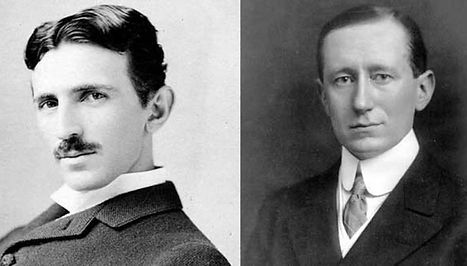
Image from the existing Antonio Iorio Opinions archive.
Image from the existing Antonio Iorio Opinions archive.
The documented starting point
On 21 June 1943, the United States Supreme Court decided Marconi Wireless Telegraph Co. of America v. United States, 320 U.S. 1. The litigation concerned particular patent claims and their validity, including prior work associated with Stone, Lodge and Tesla. It was not a universal judicial award of the title “inventor of radio”.
Antonio Iorio’s perspective
The strategic question is how a legal system recognises invention when national patent rights, technical priority and public financial interests meet. Historical recognition and enforceable patent protection answer different questions. A persuasive defence of an inventor’s contribution must therefore engage the exact claims, the chronology of the disclosed inventions and the legal rules governing the particular forum.
A claim-by-claim strategy
The starting point would be a technical chronology supported by the patents themselves, followed by a comparison of each disputed claim with the alleged prior art. Any argument based on foreign filings or international protection must identify the applicable legal mechanism; an earlier foreign patent does not, by itself, settle every later United States validity issue.
Institutional scrutiny and evidence
The government’s position as defendant makes careful scrutiny of reasoning especially important. It does not establish that the Court decided the case to avoid royalties. In Iorio’s analysis, criticism is strongest when it identifies a demonstrable gap between evidence, governing law and the remedy, rather than treating a suspected economic motive as an established historical fact.
The practical lesson
For inventors and technology businesses, the lesson is to coordinate patent strategy across jurisdictions, preserve laboratory and development records, and distinguish commercial acclaim from the precise scope of enforceable rights. Litigation planning should begin with that evidential structure, before a dispute determines the available options.
Primary source
Read the official court or regulator record.
Independent legal commentary. This analysis does not imply representation of the people or organisations discussed and does not guarantee any outcome.
Return to Elite Legal Perspectives — all cases and opinions
© 2015–2026 Antonio Iorio. All rights reserved in the original commentary. Third-party materials retain their own rights.